

 2345浏览器
 火狐浏览器
火狐浏览器 谷歌浏览器
谷歌浏览器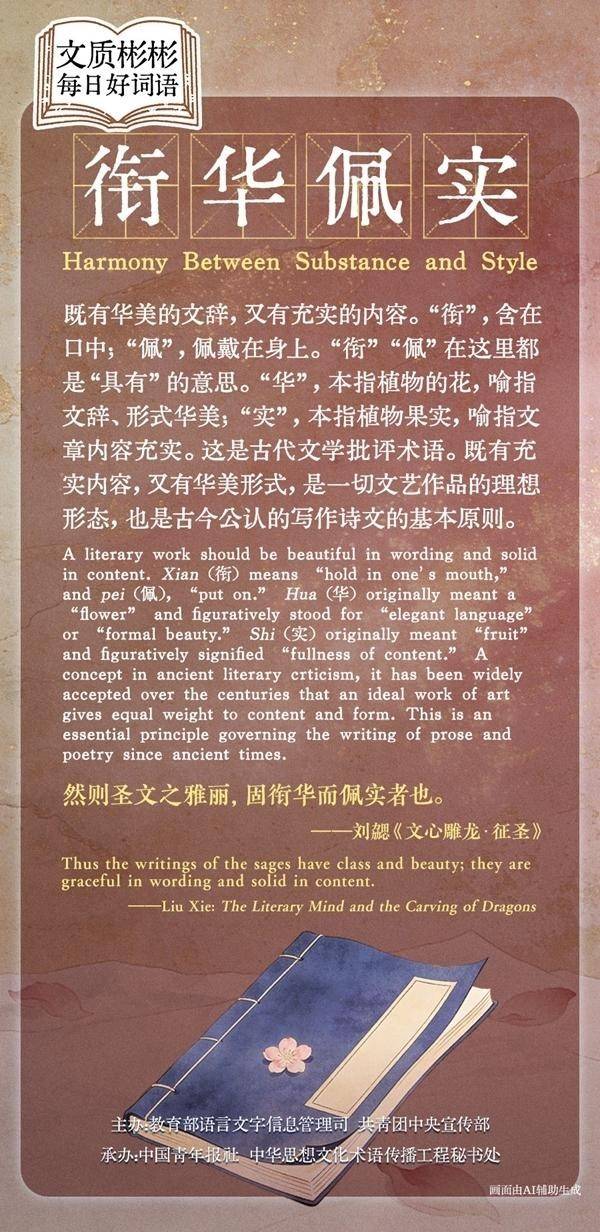
整理/余冰玥 制图/ 张玉佳
衔华佩实
既有华美的文辞,又有充实的内容。“衔”,含在口中;“佩”,佩戴在身上。“衔”“佩”在这里都是“具有”的意思。“华”,本指植物的花,喻指文辞、形式华美;“实”,本指植物果实,喻指文章内容充实。这是古代文学批评术语。既有充实内容,又有华美形式,是一切文艺作品的理想形态,也是古今公认的写作诗文的基本原则。
Harmony Between Substance and Style
A literary work should be beautiful in wording and solid in content. Xian means "hold in one's mouth", and pei means "put on". Hua originally meant a "flower" and figuratively stood for "elegant language" or "formal beauty". Shi originally meant "fruit" and figuratively signified "fullness of content". A concept in ancient literary criticism, it has been widely accepted over the centuries that an ideal work of art gives equal weight to content and form. This is an essential principle governing the writing of prose and poetry since ancient times.
引例
然则圣文之雅丽,固衔华而佩实者也。(刘勰《文心雕龙·征圣》)(既然如此,那么圣人的文章既雅正又华丽,本就兼有华美的文采和充实的内容。)
Thus the writings of the sages have class and beauty; they are graceful in wording and solid in content. (Liu Xie: The Literary Mind and the Carving of Dragons)
来源:中国青年报
2026年01月30日 01版